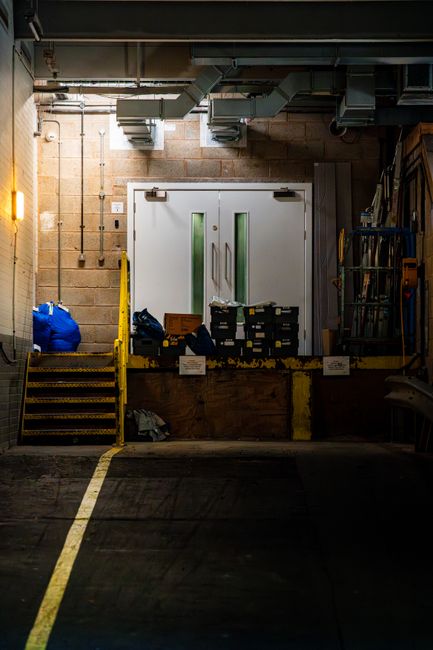
Basement and loft rubbish clearance access Kentish Town
Posted on 06/07/2026
Basements and lofts are often where clutter quietly goes to disappear. Boxes from old moves, broken furniture, leftover renovation waste, forgotten appliances, and those "I'll deal with it later" piles all end up in the hardest-to-reach parts of a property. If you are dealing with Basement and loft rubbish clearance access Kentish Town, the real challenge is rarely just the rubbish itself. It is the stairs, the tight turns, the low head height, the awkward trapdoor, the lighting, and the simple question of how everything gets out safely without damaging the property. Truth be told, that is where good planning makes all the difference.
This guide walks you through what access-focused basement and loft clearance actually involves, why it matters in Kentish Town homes and flats, how a professional clearance is usually handled, and what to check before anyone starts lifting. You will also find practical tips, a comparison of methods, a realistic example, and a useful checklist you can keep to hand. If you are weighing up a bigger declutter or property clearance, a broader service such as waste clearance in Kentish Town or even house clearance in Kentish Town may also be relevant, depending on the scale of the job.

Why Basement and loft rubbish clearance access Kentish Town Matters
Access is everything. A loft packed with old boards, dead suitcases, and dusty bags is one thing; getting those items down a narrow stairwell, through a hallway with a tight bend, and out to the vehicle is another matter entirely. The same goes for basements, especially in older Kentish Town properties where cellar stairs can be steep, damp, or low-ceilinged. If the route out is not planned properly, a clearance can become slow, messy, and risky very quickly.
In Kentish Town, properties vary a lot. You may be dealing with a Victorian terrace, a converted flat above shops, a maisonette with a shared stairwell, or a period building where access was never designed for modern bulky waste. That is why access-led rubbish clearance is so important. It is not just about removing items. It is about protecting the structure, keeping walkways clear, and avoiding avoidable accidents. One dropped wardrobe on a tight staircase can ruin a wall, a bannister, and everyone's day. Nobody wants that.
It also matters for neighbours and shared spaces. In many local buildings, access routes are communal. If you are clearing a loft or basement, you may need to think about noise, time of day, lift use, and how rubbish is staged in the hallway. A tidy, efficient approach is not only more professional; it is simply kinder to everyone involved.
For people renovating or refurbishing, access planning becomes even more crucial. Rubbish from a basement strip-out or loft conversion often includes mixed waste, timber offcuts, old insulation, broken storage units, and the odd surprise item that turns up after years of being hidden away. If you are also dealing with builder's debris, it may be worth looking at builders waste disposal in Kentish Town so the job is handled in the right waste stream from the outset.
How Basement and loft rubbish clearance access Kentish Town Works
A proper access-based clearance usually starts with a quick assessment. The aim is to understand what needs moving, where it is located, and how it can safely reach ground level. That might sound obvious, but in practice it saves time and reduces mistakes.
Here is how it usually works in real life:
- Initial review - The team checks whether the items are in a loft, basement, cellar, attic room, or storage space. They look at stair width, head clearance, turning space, parking access, and any shared areas.
- Sorting and segregation - Items are separated into reusable goods, recyclable material, and general rubbish. If the space contains furniture, you may also want to consider furniture removal in Kentish Town or furniture disposal in Kentish Town depending on condition.
- Safe movement plan - Heavier items are removed first or last depending on the route, the number of handlers, and how much turning space is available. There is no single formula here; judgement matters.
- Protective measures - Floors, banisters, corners, and door frames may be protected if the route is tight or the items are bulky.
- Loading and transport - Waste is carried from the access point to the vehicle in manageable loads. If the loft or basement access is especially awkward, smaller trips are often safer than trying to force one big lift.
- Final sweep - Once the rubbish is out, the area is checked so nothing small has been left behind, which happens more often than people think.
The best clearances feel calm and methodical. Not rushed. Not chaotic. You may hear a lot of footsteps, a few short instructions, and the occasional thud of old cardboard finally meeting the bin bag it should have met years ago. Slightly satisfying, if we're honest.
If the clearance is part of a larger property cleanout, services such as property clearance in Kentish Town can be a better fit because they are built for more complex, whole-property jobs rather than isolated items alone.
Key Benefits and Practical Advantages
When access is handled well, the benefits go beyond simply getting rubbish out of the property.
- Less risk of damage - Stairwells, walls, floors, and doors stay in better condition.
- Faster clearance - A clear route and a sensible sequence reduce wasted movement.
- Improved safety - Tight basement and loft access can be awkward; professional handling lowers the chance of trips, strains, and dropped items.
- Better use of space - A cleared loft or basement can become usable again, whether for storage, renovation, or simple breathing room.
- Cleaner recycling outcomes - When waste is sorted properly, more material can be directed to recycling or reuse.
- Less stress for homeowners and landlords - You do not have to wrestle with the heavy lifting yourself. Honestly, that alone is a big win.
There is also a financial angle, even if it is not always obvious at first. Poor access planning can lead to wasted labour time, avoidable complications, and sometimes extra visits. Good planning usually reduces surprises. If you want a better idea of how pricing is approached for different types of collection, see pricing and quotes for a clearer sense of what to ask about.
And for those who care about waste handling beyond the immediate job, it helps to know that responsible sorting and reuse matter. A useful overview is available on recycling and sustainability.
Who This Is For and When It Makes Sense
This kind of service makes sense for a surprisingly wide range of people. The obvious cases are homeowners with a full loft or basement packed with clutter, but there are plenty of other situations too.
- Homeowners preparing to sell - Clearing hidden storage areas can make a property feel larger and easier to present.
- Landlords and letting agents - Tenancy ends often reveal bulky waste left behind in lofts, basements, or under-stair spaces.
- People renovating - Old plasterboard, broken furniture, and long-term junk often accumulate where people have stored "just for now" items.
- Families downsizing - Before a move, every forgotten box suddenly becomes a decision point.
- Flat owners in converted buildings - Access through shared hallways and narrow stairs requires a steadier, more thoughtful approach.
- Commercial premises with basement stock rooms - Not every basement is residential. Some are storage-heavy and awkward to empty, which is where commercial waste removal in Kentish Town can be relevant.
If the space contains old beds, wardrobes, cabinets, or other bulky household pieces, then an item-specific service such as furniture collection in Kentish Town may be the most practical route. For white goods, there is also appliance disposal in Kentish Town, which is useful when basements or lofts have become the final resting place for an old fridge, freezer, or washing machine.
Not every job needs the same level of service. Sometimes you only need a small, one-off clearance. Sometimes the access issues are the real story. If that sounds familiar, you are in the right place.
Step-by-Step Guidance
Here is a practical way to approach basement or loft rubbish clearance without making it harder than it needs to be. The order matters more than people realise.
- Photograph the space first - Take a few clear pictures of the entrance, staircase, and the items themselves. This helps explain the access conditions and the volume of waste.
- Measure the awkward bits - Stair width, low beams, hatch size, and tight corners are the details that decide whether a bulky item can come out in one piece.
- Separate obvious hazards - Old paint tins, sharp metal, broken glass, damp cardboard, and anything suspicious should be set aside and not mixed into general waste.
- Decide what stays, what goes - In old lofts especially, it is easy to keep circling the same box. Be decisive where you can.
- Clear the route - Move bicycles, shoes, laundry, and loose storage items out of the corridor, landing, or hallway before work starts.
- Check parking and access outside - In a busy area like Kentish Town, a smooth loading point can save a lot of time. If you are near the station or local side streets, parking and timing need a bit of thought.
- Load in manageable stages - Heavy, awkward items should be moved carefully rather than all at once. This is not the moment for heroics.
- Confirm the final sweep - Ask for a check of the loft or basement so loose debris, screws, and small fragments are removed too.
A realistic example: a top-floor flat with a cramped loft hatch may require items to be broken down before removal. A wardrobe that would be simple in a house with broad stairs may need to be dismantled piece by piece. That is normal. It is not a problem, just part of the process.
If your job started as one thing and turned into several, you can widen the scope thoughtfully. A mixed clearance may include waste disposal in Kentish Town, rubbish collection in Kentish Town, and, if there is a lot to move, a broader services overview can help you understand what fits best.
Expert Tips for Better Results
Good access clearance is usually less about muscle and more about preparation. Here are the small decisions that often make the biggest difference.
- Start with the heaviest items nearest the access route - It sounds simple, but it stops the team from repeatedly carrying items past the same awkward corner.
- Use daylight if possible - A bright loft hatch at 9:00 in the morning is far easier to work with than a dim basement at dusk.
- Keep one person in charge of decisions - Too many voices slow things down. One person deciding what goes is usually best.
- Ask about dismantling before the day starts - Some items are much easier to remove in sections. If you leave it until the last minute, things get fiddly.
- Protect shared areas early - A bit of protection at the start is better than a repair conversation later.
- Think in waste streams - Furniture, timber, mixed rubbish, and appliance waste are not all the same thing. Sorting properly is cleaner and usually more efficient.
One practical tip that gets overlooked: if the basement is damp, let the team know before they arrive. Damp cardboard, mouldy soft furnishings, and moisture-damaged boxes can change how the rubbish should be handled. It is a small detail, but it matters.
There is also a good habit worth building. Keep a running "out" pile in the loft or basement for anything you no longer want, rather than letting it disappear back into the shadows. That trick saves a lot of future headaches. Not glamorous, but effective.
If you want to reduce the amount of waste created in the first place, this guide on ways to decrease production waste is useful for a more prevention-focused mindset, especially for renovation or work-related clear-outs.

Common Mistakes to Avoid
Most clearance problems do not come from the rubbish itself. They come from poor planning around access. Here are the mistakes that cause the most friction.
- Underestimating the access route - A loft hatch may look fine until a bulky item needs to turn sideways. Then what?
- Ignoring communal rules - Shared hallways, lift times, and neighbour considerations are easy to miss and awkward to fix later.
- Leaving sorting until the last minute - Mixing everything together makes recycling harder and slows the clearance down.
- Forgetting about parking - In a busy part of London, parking can be the quiet troublemaker behind the whole job.
- Trying to move oversized items without enough help - One person can manage a lot; a wardrobe on a narrow staircase is not the time to test that theory.
- Not checking for fragile or hazardous materials - Old insulation, glass, metal edging, and unknown contents need attention.
A small human truth here: people often open a loft or basement and think, "This will only take ten minutes." Then the first box is full of cables, the second has loose tiles, and the third contains a chair from a school disco era nobody wants to remember. It happens. The main thing is not to rush the decision-making.
Tools, Resources and Recommendations
The right tools do not need to be fancy. They just need to make the route safer and the work easier.
- Strong gloves - Useful for dusty lofts, rough timber, and awkward edges.
- Head torch or bright portable lighting - Especially helpful in basements and dark eaves.
- Dust sheets or floor protection - Helpful where stairs or carpets need safeguarding.
- Moving straps or trolleys - Only where the route allows it; they are helpful, but not magic.
- Bin bags and heavy-duty sacks - Good for loose waste, but don't overload them.
- Labels or markers - A simple way to keep "keep", "remove", and "recycle" piles from drifting into one another.
In terms of service choice, start by matching the job to the waste type and access. A few useful pages to compare include loft clearance in Kentish Town for upper-space jobs and waste clearance in Kentish Town if the job is more mixed or more general.
For readers who are also dealing with a move or planning work in the area, some background reading on the locality can help you understand why access is often tricky in older buildings: living in Kentish Town: local insights and Kentish Town Road rubbish removal guide are both useful context pieces.
Law, Compliance, Standards, or Best Practice
Clearance work involves more than lifting and loading. In the UK, waste handling should be carried out by a legitimate waste carrier, and rubbish should be transferred and managed responsibly. For customers, the simplest rule is this: always use a provider that can explain how waste is handled, what happens to reusable material, and how different waste types are separated.
Best practice also matters inside the property. If the clearance is in a shared building, avoid blocking communal routes, and keep noise and disruption to sensible levels. In some buildings, especially conversions, access timing may need to respect neighbours or building rules. Nothing exotic there, just basic courtesy and planning.
Safety is another practical standard. Basement access can bring damp, poor lighting, uneven steps, and low ceilings into play. Loft access often means dust, insulation, or awkward crawling spaces. Because of that, the safer approach is to assess first and move second. Simple, really.
If you want more reassurance about how waste is handled and what to expect from a compliant provider, the site's waste carrier licence and compliance information is a sensible place to start. You may also find insurance and safety helpful if the job involves awkward access or valuable property surfaces.
For sensitive or larger clearances, it is often wise to keep records of what was removed, especially in rental, probate, or commercial settings. Not because you expect a problem, but because documentation saves time if questions come up later. A bit dull, perhaps. Still useful.
Options, Methods, and Comparison Table
There are a few ways to deal with loft or basement rubbish. The right one depends on volume, access, and how quickly you need the space cleared.
| Method | Best for | Advantages | Limitations |
|---|---|---|---|
| DIY removal | Very small loads, easy access, light items | Low direct cost, full control | Time-consuming, physically demanding, higher risk of damage or injury |
| Mixed household clearance | General loft or basement clutter | Flexible, good for varied waste, efficient for one-off jobs | Needs careful sorting if furniture or appliances are included |
| Furniture-focused collection | Wardrobes, beds, tables, soft furnishings | Handles bulky items well, helpful for access-heavy jobs | Not ideal if the space also contains mixed rubbish or building debris |
| Property clearance | Large clear-outs, probate, move-out, long-term clutter | Comprehensive, suitable for multiple rooms and storage areas | May be more service than you need for a small job |
| Builders waste disposal | Renovation debris, timber, rubble, packaging | Good for worksite-style waste and post-refurb clearances | Less suitable for household items or mixed domestic clutter |
As a rule of thumb, if you are looking at one or two bags, DIY may be fine. If there are stairs, bulky items, or awkward access, professional help often becomes the better option quickly. And if there is a mix of furniture, waste, and renovation material, it is usually more efficient to bundle the job thoughtfully than to split it into three mini disasters.
Case Study or Real-World Example
Here is a realistic example based on the kind of job people in Kentish Town often face.
A homeowner in a Victorian terrace wanted to clear a dusty loft that had become a storage zone for broken chairs, old suitcases, seasonal decorations, and several bags of mixed junk. The access point was a narrow loft hatch with a short ladder, and the landing below had a tight turn into the staircase. At first glance, the job looked simple. It was not.
The solution was to stage the work in layers. Lightweight loose items came down first in sacks. Then the team separated furniture pieces that could be safely dismantled. A narrow route protection setup was used to avoid scuffs on the stair edges and wall corners. The biggest difference came from sorting before lifting. Instead of carrying everything down and deciding later, the team grouped recyclable items, reusable pieces, and general waste from the start.
The result? The loft was cleared in a controlled way, the property stayed tidy, and the homeowner had a clear view of what the space could become next. That is often the moment people realise how much room they have been sitting on all along. A bit of air up there changes everything.
For similar jobs involving property-wide clutter, a service such as house clearance in Kentish Town may be the more appropriate route, while specialist items can be handled separately through furniture disposal in Kentish Town.
Practical Checklist
Use this checklist before the clearance starts. It keeps things simple and avoids the usual last-minute scramble.
- Take clear photos of the loft or basement access.
- Measure any hatch, stair width, or tight turns.
- Confirm whether the route is shared or private.
- Move items away from the access path.
- Separate obvious furniture, appliances, and general rubbish.
- Flag any damp, mouldy, sharp, or potentially hazardous items.
- Check whether parking or loading space is available nearby.
- Decide in advance what must stay and what can go.
- Ask about dismantling bulky items if needed.
- Make sure the final sweep includes small debris and fixings.
Expert summary: if access is tight, planning is the service. The clearing itself is just the final step. In Kentish Town, where many buildings are older and access can be narrow or shared, a measured, tidy approach will almost always beat a rushed one.
If you are comparing broader options, you may also find rubbish collection in Kentish Town useful for smaller loads and furniture removal in Kentish Town for bulky pieces that need special handling.
Get a free quote today and see how much you can save.
Conclusion
Basement and loft rubbish clearance in Kentish Town is one of those jobs that looks straightforward until you actually stand at the bottom of the stairs and think, right, how on earth is that coming down? The answer is usually: carefully, patiently, and with a plan. When access is assessed properly, the clearance becomes safer, quicker, and far less disruptive for everyone involved.
Whether you are clearing a single storage area, preparing a property for sale, sorting a rental at the end of a tenancy, or tackling a bigger renovation cleanout, the key is to match the method to the access. That means thinking about stairs, shared routes, furniture size, sorting, and disposal before anyone starts hauling. Small decisions up front save bigger headaches later. Always.
And if your loft or basement has been quietly holding the chaos of several years, don't worry. That's normal. With the right approach, the space can feel usable again, and that fresh, cleared-out feeling is honestly hard to beat.