Fortess Road waste removal options in Kentish Town
Posted on 12/06/2026

Fortess Road waste removal options in Kentish Town: a practical local guide
If you live, work, or manage a property near Fortess Road, waste has a habit of piling up at the worst possible time. A hallway renovation leaves rubble in the way. A flat move uncovers old furniture you no longer want. A shop refit, a garden clear-out, a builders' skip that never quite fits the street - all of it ends with the same question: what is the smartest way to clear it without creating more hassle?
This guide to Fortess Road waste removal options in Kentish Town breaks down the main choices, how they work in real life, and what to consider before you book anything. You'll find practical advice for household rubbish, bulky items, renovation debris, office waste, and one-off clearances, plus local realities that matter on busy London streets. Truth be told, the best option is rarely just the cheapest one; it's the one that fits your access, timing, volume, and obligations.
We'll also look at compliance basics, useful checklists, and the kind of small details that make a removal job run smoothly rather than turning into a stressful afternoon with bags, dust, and a neighbour who's not thrilled about the pavement being blocked. Let's make it simple.
- Why it matters
- How it works
- Key benefits
- Who it's for
- Step-by-step guidance
- Expert tips
- Common mistakes
- Tools and resources
- Law and best practice
- Comparison table
- Real-world example
- Checklist
- Conclusion
- Frequently asked questions
Why Fortess Road waste removal options in Kentish Town Matters
Fortess Road sits in a part of north London where access can be awkward, parking can be tight, and rubbish can quickly become an eyesore. That alone makes waste removal more than a nice-to-have. It affects how a property looks, how safe it feels, and how quickly you can get on with whatever comes next, whether that's moving house, finishing a refurb, or simply reclaiming a room that has become a storage depot.
There's also a practical local factor. In an area like Kentish Town, the wrong waste choice can create more friction than the waste itself. A skip might block access, bags left too long can attract complaints, and overfilled bins often just get ignored or scattered. Small street, big headache. The right option saves time, reduces lifting, and helps you avoid the kind of delays that tend to snowball.
Waste removal also matters because different waste streams need different handling. A few black bags of general household rubbish is one thing. Broken tiles, old plasterboard, white goods, or timber offcuts are another. If you mix materials without thinking, you may pay more, slow the job down, or end up needing a second collection. That's the bit people often discover the hard way.
For nearby properties, good waste management can also support cleaner communal spaces and less disruption for neighbours. If you are planning a wider tidy-up, it can be sensible to read broader local guidance too, such as house clearance services in London or, if your project is more renovation-led, builders waste removal options. Those pages can help you compare broader service types before you commit.
Expert summary: The best waste removal choice on Fortess Road is usually the one that matches your load type, access constraints, and timing - not simply the one that looks easiest at first glance.
How Fortess Road waste removal options in Kentish Town Works
At a simple level, waste removal works by matching your rubbish to a collection method. That sounds obvious, but the details matter. One service may be ideal for mixed household clutter; another may be better for trade waste or bulky furniture. The trick is understanding what needs to go, how much space it takes up, and where it will be collected from.
In practice, most local waste removal jobs follow one of a few routes:
- Man-and-van clearance: A team arrives, loads waste for you, and removes it in one visit.
- Skip hire: A skip is delivered and collected later, usually when you have a larger volume or longer project.
- Branded bin or sack collections: Suited to smaller, regular, or pre-sorted waste streams.
- Specialist disposal: For items like mattresses, fridges, electricals, or construction waste that need specific handling.
On a street like Fortess Road, access often shapes the choice more than the waste itself. Ask yourself: can a large vehicle stop safely? Is there room for a skip without causing problems? Are you removing items from a first-floor flat, a basement, or a rear garden? Those questions determine whether a quick load-and-go service is more realistic than leaving a container on-site.
Most professional collections start with a description of the waste, maybe a few photos, and a rough estimate of volume. Good operators will ask what is inside the pile, not just how big it looks. That helps them plan the right vehicle, labour, and disposal route. If the waste is heavy, awkward, or partially sorted, mention that early. It saves time later. Sometimes a lot of time.
If you need a broader overview of how services are arranged in the city, waste disposal services can be a helpful starting point, while rubbish clearance in London is useful when you want a simple end-to-end pickup rather than a DIY option.
Key Benefits and Practical Advantages
The main benefit of choosing the right waste removal option is not just that the rubbish disappears. It is that your space becomes usable again without causing unnecessary stress, delay, or neighbour complaints. That matters whether you're clearing a single room or handling a larger property project.
Here are the practical advantages people usually care about most:
- Speed: A good collection can clear a pile in one visit, which is especially useful if you're on a deadline.
- Less manual labour: Loading heavy items yourself is slow, tiring, and occasionally a bit grim, let's face it.
- Better space management: You avoid leaving waste in hallways, front gardens, or shared areas for days on end.
- Cleaner compliance: Proper disposal reduces the risk of fly-tipping or using the wrong outlet for restricted waste.
- More predictable outcomes: A clear estimate and planned collection means fewer last-minute surprises.
There is also a less obvious advantage: confidence. When you know what's going, how it will be handled, and when the space will be clear, the rest of the job becomes easier to manage. You can book the decorator, schedule the moving van, or simply breathe a little easier.
For landlords and property managers, good waste removal can help protect void periods and keep common areas presentable. For homeowners, it can make a renovation feel less chaotic. For businesses, it can keep customer-facing spaces neat and reduce disruption to daily trade. Different goals, same end point - a clean, workable site.
Who This Is For and When It Makes Sense
These Fortess Road waste removal options are relevant to a wide range of people, and the decision often depends on what kind of mess you're dealing with. Not all waste problems are equal, and not every solution suits every street or schedule.
You may need this kind of service if you are:
- moving out of a flat and need old furniture, bags, or miscellaneous clutter removed
- renovating a kitchen, bathroom, or entire property
- clearing a loft, cellar, garden, or storage space
- managing end-of-tenancy clearance for a landlord or agent
- running a local office, studio, salon, or retail unit that has accumulated bulky waste
- dealing with items too large or awkward for normal household bins
It also makes sense when timing is tight. Maybe you've got keys handover tomorrow. Maybe the skip cannot be placed where you expected. Maybe you only realised after moving a wardrobe that it is absolutely not going back through the door. That happens more often than people admit.
A sensible rule of thumb: if your waste is more than a couple of regular bin bags, includes heavy items, or needs more than one person to carry safely, look at a proper removal service rather than trying to improvise. DIY can work for small amounts, but once the pile grows, so does the hassle.
If your needs are specific, you may also find related pages useful, such as office clearance services or furniture disposal options. They can help you narrow down the right path without overpaying for a service you don't really need.
Step-by-Step Guidance
If you want the smoothest result, the process should start before anyone turns up with a van. A little preparation goes a long way, especially on a road where parking, access, and timing can all matter.
1. Identify exactly what needs to go
Walk through the space and separate waste into categories: general rubbish, bulky furniture, electricals, recyclables, garden waste, and construction debris. If you're not sure what something counts as, take a photo. A lot of confusion comes from mixed piles that look smaller than they really are.
2. Decide whether you need loading help
If the waste is downstairs and near the front entrance, a man-and-van style service may be enough. If it is on an upper floor, in a basement, or spread across several rooms, you probably want a team that includes labour. Carrying a broken sofa down two narrow flights of stairs is not exactly a joy.
3. Check access and parking
On Fortess Road and nearby streets, collection logistics can be just as important as the waste itself. Think about where the vehicle can stop, whether any permissions are needed, and how long loading might take. A service that understands local access conditions is usually easier to work with.
4. Ask for a clear quote structure
Make sure you understand how pricing is based: by volume, weight, item type, labour time, or a combination. If there are likely extras - for example, difficult access, heavy materials, or waiting time - ask about them upfront. Nobody likes surprise charges. Nobody.
5. Confirm what happens after collection
Good services should be able to explain, in plain language, what happens to the waste after pickup. For example, whether it will be sorted, recycled where possible, or taken to an authorised facility. You do not need a lecture, just a clear answer.
6. Prepare the waste before collection day
Put smaller items into bags or boxes, keep sharp objects safe, and separate anything you know is restricted. That small bit of prep can shave time off the job and reduce the chance of issues on the day. If the collection is early morning, you will be grateful later.
For more detailed service planning, you may also want to explore same-day waste collection if your job is urgent, or our skip hire guide if you're weighing up container-based disposal versus a loaded removal service.
Expert Tips for Better Results
The difference between a decent clearance and a seamless one is usually in the details. A few small choices can save you money and reduce friction.
- Send photos before booking: A clear set of pictures beats a vague description every time.
- Separate reusable items early: If anything can be donated or reused, move it out before the clearance. It may reduce the load and the cost.
- Keep heavy waste grouped together: Bricks, soil, tiles, and plasterboard are a different beast from mixed household clutter.
- Tell the provider about stairs or awkward access: The job is much easier if nobody has to guess what the building looks like.
- Plan around neighbours and traffic: Early mornings and school-run times can be tricky on local roads.
One useful habit: stand in the entrance and imagine the route the team will take from the waste to the vehicle. If you see a tight corner, a shared hallway, or a locked gate, mention it. That tiny bit of foresight avoids a lot of crossed wires.
Also, if you have mixed waste, ask whether it can be separated for better disposal efficiency. Sometimes sorting a small amount of recyclable material can make a job cleaner and simpler. Not always, but often enough to be worth asking.
And yes, sometimes the best tip is the dullest one: measure the space. A sofa that seems manageable in a room can turn into a whole different story in a stairwell. Strange, but true.

Common Mistakes to Avoid
A lot of avoidable problems come from underestimating the job. The waste itself may not be the issue. It's usually the planning around it.
- Booking the wrong type of service: For example, choosing a small collection when you actually need labour and multiple loads.
- Mixing hazardous or restricted items in with general waste: That can create disposal problems and may lead to rejection.
- Guessing the volume: People often think a pile is smaller than it is. Then reality turns up, as it does.
- Ignoring access constraints: Narrow entryways, parking limits, and stairs all affect how smoothly the job runs.
- Leaving everything to the last minute: This is one of the biggest reasons clearances become stressful.
Another common mistake is assuming that all waste is the same. It isn't. Old paint tins, fridges, mattresses, rubble, timber, and mixed bagged rubbish may need different handling. If you're not sure, ask. Better a slightly longer conversation than a refused collection.
For business users especially, one overlooked issue is continuity. If your waste sits in a rear yard or shared access area too long, it can interfere with deliveries, staff movement, and customer experience. That can become annoying fast.
Tools, Resources and Recommendations
You do not need much equipment for a straightforward clearance, but the right tools make the job cleaner and safer. If you are preparing waste yourself before a collection, a few basics help a lot.
- Heavy-duty bags: Useful for general rubbish and smaller loose items.
- Gloves: Basic protection for sharp edges, dust, and awkward handling.
- Tape and boxes: Handy for cables, loose fittings, and smaller dismantled pieces.
- Trolley or sack truck: Worth having if you need to move heavier items across short distances.
- Basic measuring tape: Useful for checking large furniture and door clearances.
For certain jobs, the most useful resource is not a tool but a bit of guidance. If you need to clear a large volume, the related professional rubbish removal page can help you understand what a full-service collection typically includes. If the waste includes mixed furniture, sofa disposal may also be relevant. For larger household moves, end-of-tenancy clearance is another good reference point.
Practical recommendation? Take two or three photos in good daylight. Include one wide shot and one close-up of the awkward stuff. That simple step makes quoting much easier and reduces the chance of misunderstanding.
Law, Compliance, Standards, or Best Practice
Waste removal in the UK is not something to be casual about. You do not need to know every technical detail, but you do need to follow sensible best practice and use properly authorised disposal routes. That is the baseline.
For households and businesses alike, the key principles are straightforward:
- do not leave waste for unauthorised collection
- do not dump rubbish on the street or pavement
- use legitimate operators and ask where waste will go
- separate restricted or specialist items when advised
- keep any permissions or booking details if they are needed for access or placement
If you are a business, you may have additional duties around duty of care, documentation, and keeping waste out of general household streams. The exact requirements depend on the type of waste and your circumstances, so it is sensible to confirm details rather than assume. If a provider cannot explain what happens to the waste, that is usually not a great sign.
For residents near Fortess Road, the practical standard is simple: keep the street tidy, avoid blocking shared access, and make sure waste is removed through a service that can handle it properly. A reputable operator should be comfortable explaining their process in plain English. No jargon parade needed.
If the job involves bulky items, electricals, or renovation waste, it's worth asking whether the collection route is suitable for those materials. Some items are common enough, but some require a bit more care. Best practice is usually common sense backed by the right disposal route.
Options, Methods, or Comparison Table
Choosing between waste removal methods becomes much easier once you compare them against the realities of your job: size, speed, access, and how much lifting you want to do yourself.
| Method | Best for | Main advantages | Possible drawbacks |
|---|---|---|---|
| Man-and-van clearance | Mixed household waste, furniture, quick clearances | Fast, loading included, flexible for flats and tight access | May not suit very large volumes or long-term projects |
| Skip hire | Renovations, bigger volumes, ongoing work | Useful for staged loading, good for larger jobs | Needs space, may require permits or careful placement |
| Scheduled bin or bag collection | Smaller or regular waste streams | Simple for routine disposal, predictable | Less flexible for bulky or mixed items |
| Specialist disposal | Electricals, mattresses, rubble, awkward items | Better handling of specific materials | Can cost more depending on item type |
If you want the shortest possible route from clutter to clear space, a loading service is often the easiest choice. If your project will produce waste over several days, a skip may be more practical. If the waste is unusual, get clarity before booking. That sounds basic, but it is exactly where many jobs go sideways.
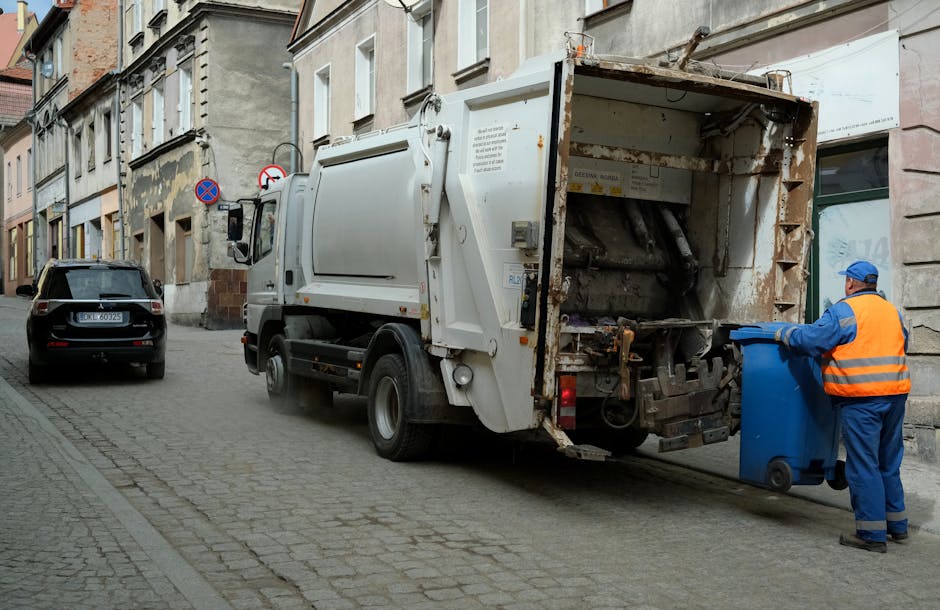
Case Study or Real-World Example
Consider a typical Fortess Road flat clearance. A resident has finished moving out and is left with a broken wardrobe, two chairs, several bags of mixed clutter, a small desk, and an old microwave. On paper, it sounds manageable. In practice, the hallway is narrow, the flat is on an upper floor, and there is no obvious place to stack everything outside while waiting for collection.
The first instinct might be to book a skip. But on a busy street, that could create parking issues and require more planning than the job really needs. A loading service is often a better fit here because the team can carry items down, load them quickly, and remove them in one go. The resident avoids dragging furniture downstairs, and the space is clear the same day.
Now imagine a different job: a small bathroom rip-out with tiles, packaging, and rubble. That is where a different method may make more sense. If the job spans a few days and waste accumulates gradually, a skip or staged collection may be easier. The point is not that one option is universally best. The point is matching the method to the mess.
That is the local reality of waste removal in Kentish Town: practical choices beat theoretical ones every time.
Practical Checklist
Use this quick checklist before booking your collection. It keeps the job simple and helps you avoid the usual snags.
- Have you identified exactly what needs removing?
- Have you separated bulky items, general waste, and any specialist materials?
- Have you checked access, stairs, gates, and parking constraints?
- Have you taken clear photos for quoting?
- Do you know whether you need labour included?
- Have you asked how the waste will be handled after collection?
- Have you confirmed the likely timing and any arrival window?
- Have you considered whether reuse or donation is possible for any items?
- Have you planned for weather, neighbours, or building access if relevant?
- Are you comfortable that the service matches the type of waste you have?
If you can tick most of those off, you are in good shape. If not, spend another five minutes on the prep. It really does save more time than you'd think.
Conclusion
The best Fortess Road waste removal options in Kentish Town are the ones that fit your space, your schedule, and the type of waste you actually have. For some people, that means a fast man-and-van clearance. For others, it means a skip, a specialist pickup, or a more structured disposal plan. The right answer depends on the job in front of you, not on a one-size-fits-all rule.
What matters most is clarity. Know what needs removing, understand the access, ask how the waste will be handled, and choose the method that keeps things simple. A bit of planning now can save a lot of stress later. And, to be fair, most people have better things to do than babysit a pile of rubbish all week.
If you are still weighing up the best route, compare the service type, the collection time, and the amount of labour involved before you decide. That small pause is usually worth it. The result should be a cleaner space, less hassle, and a proper sense that the job is actually done.
Get a free quote today and see how much you can save.
Sometimes the relief of an empty room arrives quietly. You open the door, see the floor again, and suddenly the whole place feels lighter. That's the real value here.


